
How to Rotate Your Own Tires (And Why It's Worth the Hour)
Even tread wear is basically free money — you're just moving wheels around.
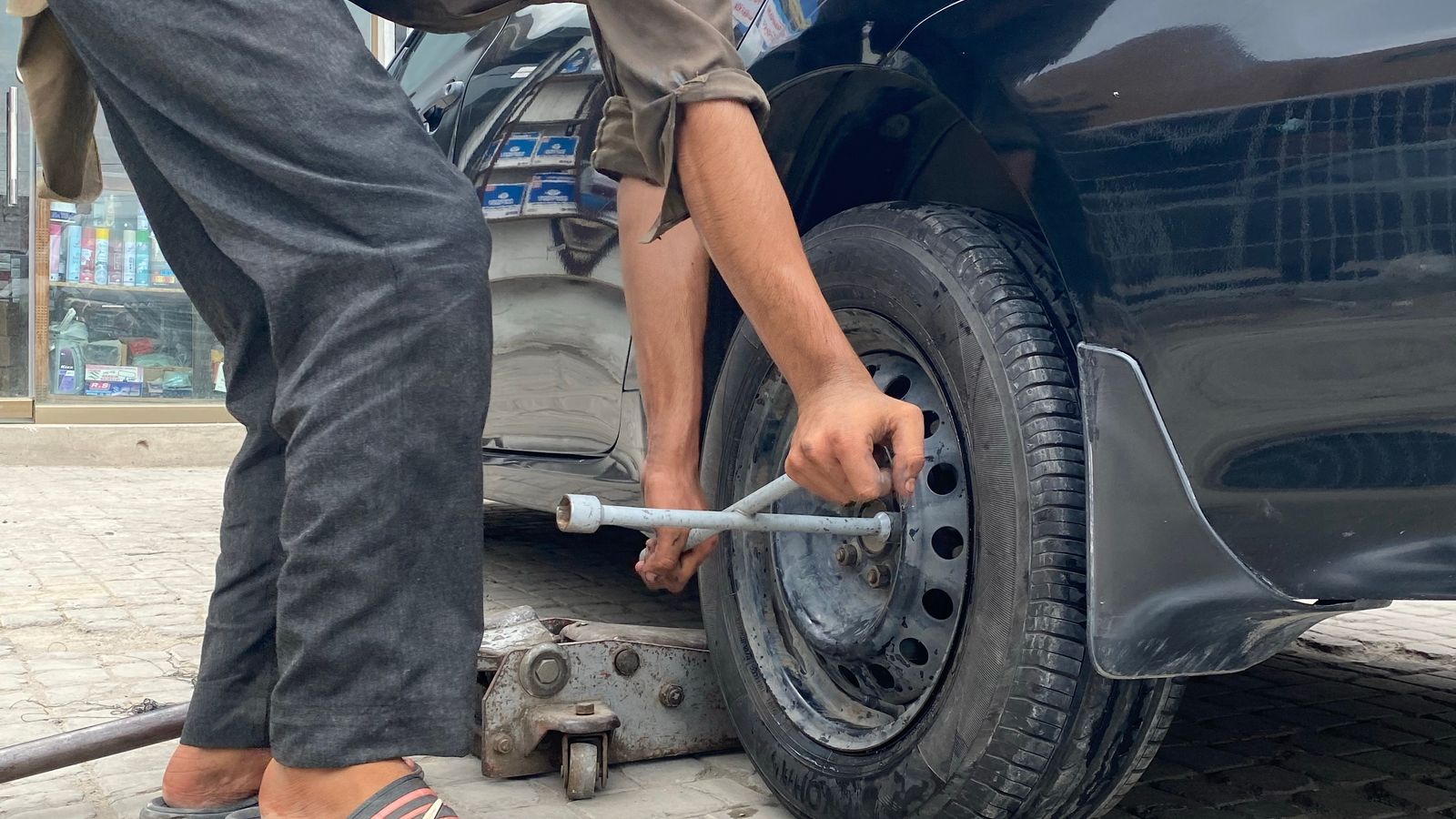
Your front tires almost always wear out faster than the rears. They steer, and on most cars they also handle the bulk of the driving and braking, so they take more abuse. Rotating your tires evens that wear out across all four and can add thousands of miles to a set — which makes it about the cheapest way there is to stretch a real expense. It's an hour of straightforward work that's basically money back in your pocket.
Tire rotation is nothing more than moving the wheels to new positions in a set pattern so they all wear evenly. The only things to get right are the pattern for your car, doing it safely on jack stands, and torqueing the lug nuts properly at the end. Nail those three and you've done a job shops charge real money for, in your own driveway.
The right pattern
For most cars on standard, non-directional tires, the simplest safe pattern is: move the rear tires straight up to the front, and cross the front tires to the opposite rear (front-left to rear-right, front-right to rear-left). That accounts for the way front and rear positions wear differently. Two exceptions to know:
- Directional tires (arrows on the sidewall showing rotation direction) must stay on the same side of the car — rotate them front-to-back only, never crossed, or they'll be spinning backward.
- Staggered setups (different tire sizes front and rear, common on some performance cars) can only go side-to-side, if at all. Check before you start.
Do it safely
- Break the lug nuts loose on the ground first. With the car parked and the wheels still bearing weight, crack each lug nut loose about a quarter turn. Try that with the wheel in the air and the tire just spins — on the ground, the tire holds still while you push.
- Lift and support on jack stands. Raise the car and set it on jack stands rated for the weight — never rely on the jack alone. On level, hard ground, chock a wheel that's staying down.
- Swap the wheels per your pattern. Pull each wheel, move it to its new position, and hand-thread the lug nuts so you're sure they're not cross-threaded.
- Snug in a star pattern, then torque. Tighten the lugs in a crisscross/star sequence (not around the circle) so the wheel seats flat, lower the car, then torque them to spec with a torque wrench.
Lug nut torque is not a place to guess. Overtightening with an impact gun warps the brake rotors (hello, pulsing pedal) and can snap studs; undertightening lets a wheel work loose on the road. Your spec is in the owner's manual — commonly around 80–100 lb-ft for a typical car, but check yours — and a $30 torque wrench pays for itself the first time it saves a rotor.
How often, and why bother
Every 5,000 to 7,500 miles is the standard rule, which makes it easy to pair with every oil change or every other one. Beyond just making tires last, regular rotation is a built-in inspection: with all four wheels off, you'll spot uneven wear that reveals alignment or suspension problems, catch a nail or a bulge early, and see how your brakes look. Many tire warranties also require documented rotations, so doing it keeps that coverage alive.
Read the wear while the wheels are off. Even wear across the tread means good pressure and alignment. Both outer edges worn = chronic underinflation. A worn center strip = overinflation. Feathered or one-sided wear = an alignment or suspension issue. The rotation is your chance to catch those cheap, before they eat a tire.
When rotation isn't enough
Rotating evens out the normal difference between front and rear wear, but it can't fix wear caused by something being wrong with the car — and if you rotate a badly worn tire around, you just spread that problem to a new corner. Watch for these patterns while the wheels are off: wear on one edge only usually means the alignment (camber or toe) is off and needs a shop's alignment rack; a scalloped or cupped pattern you can feel by running your hand around the tread points to worn suspension parts like shocks or struts; and feathering, where the tread blocks are sharp on one side and rounded on the other, is another toe-alignment sign. Rotation buys those tires a little more even life, but it doesn't cure the cause. If you spot any of these, get an alignment or a suspension check before the new set you eventually buy wears out the same crooked way. Rotation and alignment are partners — one moves the wear around, the other stops the car from creating it.
Don't skip the follow-up
Recheck the lug torque after 50 to 100 miles of driving. Freshly mounted wheels settle and seat as they warm and cool, and that can let properly torqued lugs relax slightly. A thirty-second recheck with the torque wrench is the difference between "done right" and a wheel that develops a wobble. It's the one step even careful people forget — so put it on the calendar when you finish.
Keep going
How to Know When Your Brake Pads Are Actually Worn Out
The squeal is a warning on purpose. The grind means you waited too long.
Tire Pressure: The Number on the Door, Not the Tire
The big PSI on the sidewall is a maximum, not a target — and it matters more than you think.

Why Your Car Won't Start: Battery, Starter, or Something Cheaper
What the sound (or silence) when you turn the key tells you — before you tow it anywhere.